Why it works
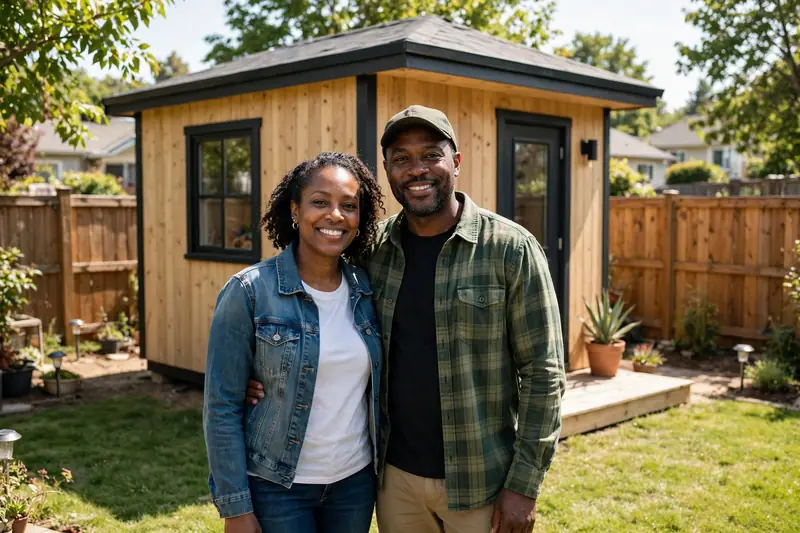
Grandparents, parents, kids — one property, three front doors. Families do this for real reasons: shared costs instead of three separate housing bills, built-in childcare from grandparents, and elder care from family instead of strangers. Nobody needs a study to tell them why it works — they feel it at every holiday dinner.
One ADU per lot — plan around it
Charles County's published draft ADU rules allow one ADU per lot — and a lot may not have both an attached and a detached unit. So the planning question is: which generation gets the ADU? Most families put the older generation in an in-law suite close to the main house, or build an attached addition for the grown kids. Either way, you get one — make it count.
Sources: Charles County Bill 2026-06 / ZTA 25-189 (published draft, §§3.01.700.F, G).
Layout strategies that work
Think in zones, not just rooms. The older generation usually gets the ground-level space — no stairs, no-step entry, walk-in shower (see our ADUs for aging parents guide). The younger generation takes the space with more separation. And give each generation its own kitchen — sharing one kitchen is the fastest way to test everyone's patience.
Design the privacy first
Multigenerational living fails on privacy, not on love. Every generation needs a real door that closes, a space to have a bad day in peace, and outdoor space of their own — even a small divided patio beats one shared yard everyone argues about. Separate entrances are non-negotiable. Sound insulation in shared walls is close behind.
The caregiver angle
Sometimes the third generation is not family — it is the aide who cares for your parent, or the nanny who watches your kids while you work. A caregiver suite on the same lot solves the hardest part of hiring help: housing. One lot, three generations, and the person who holds it all together.
If your neighborhood has an HOA, bring the CC&Rs to the first visit — the county's staff position is "HOA guidelines apply," so the HOA's architectural rules still matter. Get their approval in writing early.
Check it yourself — or skip the homework
Don't take our word for any of this. Zoning and permit questions: Charles County Planning & Growth Management, 301-645-0692. Well and septic questions: Health Department, Division of Environmental Health, 301-609-6751. The county's published draft rules are Bill 2026-06 / ZTA 25-189 ("Flexibility for Accessory Dwelling Units"); the state law is Chapter 197 of the 2025 Laws of Maryland (HB 1466/SB 891).
Or skip the homework: call (240) 222-5082 and we'll walk your lot free and tell you what your county allows — before you spend a dollar.